






As the leaves change color in Pelican Town, experienced farmers know that autumn represents one of the most lucrative seasons in Stardew Valley. This beloved farming simulation game, developed by ConcernedApe and released in 2016, continues to captivate millions of players worldwide with its charming gameplay and strategic depth. Fall brings unique opportunities to maximize your gold earnings through careful crop selection and planning. Whether you’re a newcomer to the valley or a seasoned agricultural entrepreneur, understanding which seeds to plant during these precious 28 days can make the difference between scraping by and building a farming empire.
Stardew Valley has sold over 30 million copies since its release, making it one of the most successful indie games in history. The game’s appeal lies partly in its economic systems, which reward players who master the art of crop management. Fall is particularly special because it offers some of the highest-value crops in the entire game, along with the atmospheric beauty of harvest season. With winter approaching and no outdoor crops possible during those cold months, maximizing your autumn profits becomes essential for funding upgrades and preparing for the next year.
Top 5 Fall Crops for Maximum Profit
The most profitable autumn crops require different strategies and investment levels. At the top of many farmers’ lists is the Sweet Gem Berry, an extraordinary crop that takes 24 days to mature but sells for an impressive 3,000 to 6,000 gold pieces depending on quality. These rare seeds can only be purchased from the Traveling Cart for 1,000 gold, making them a significant investment. However, the return on investment is unmatched by any other fall crop. Experienced players often save up specifically to purchase multiple Sweet Gem Berry seeds, knowing that even a small plot can yield substantial wealth.
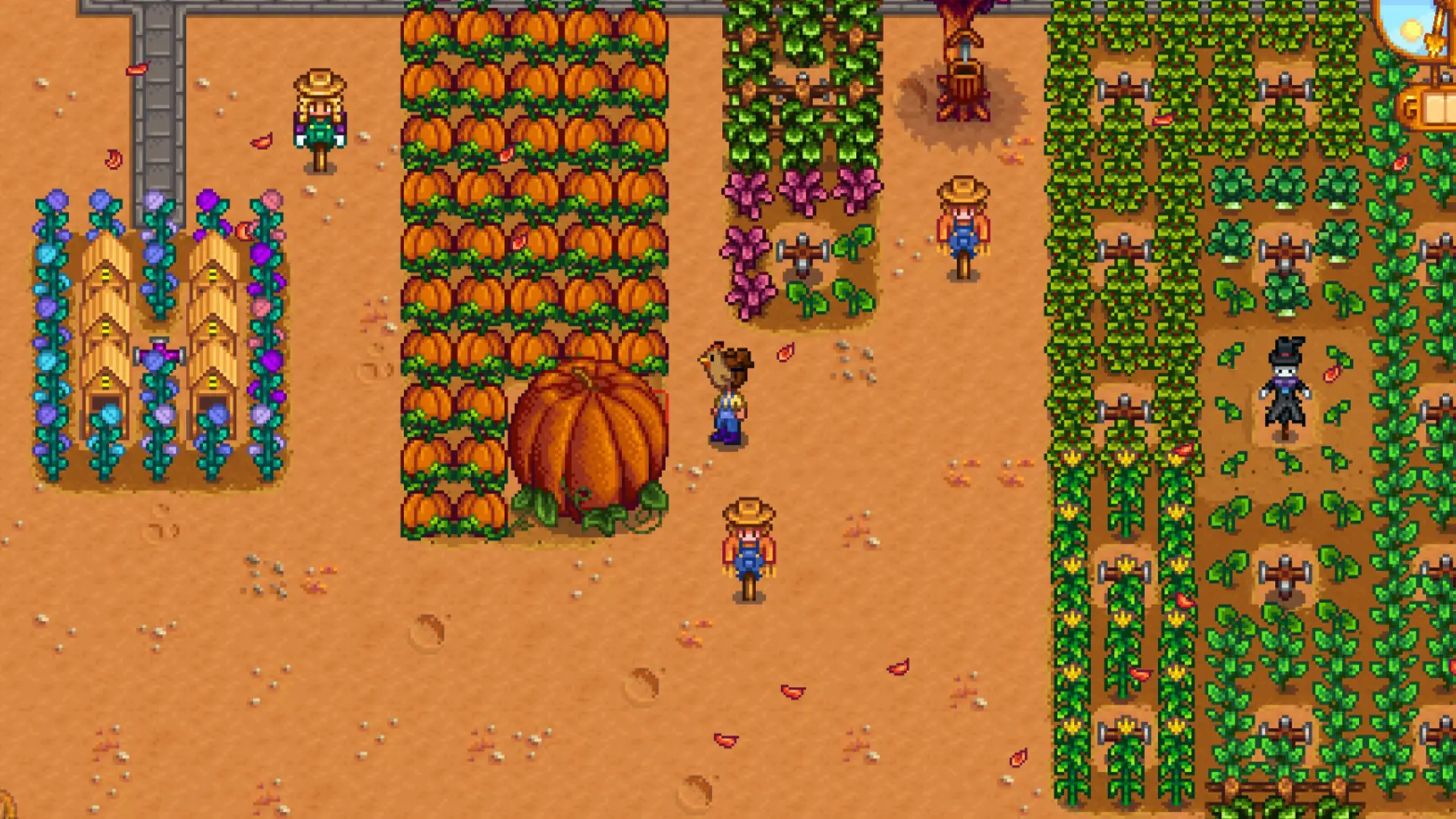
Pumpkins represent another excellent choice, requiring 13 days to grow and selling for 320 to 704 gold each. At just 100 gold per seed, pumpkins offer a favorable profit margin and the chance to produce giant crops when planted in 3×3 formations. Artichokes become available starting in Year 2 and provide solid returns with their 160 to 352 gold selling price from a mere 30 gold investment. Their 8-day growth cycle allows for up to three harvests per season with proper timing.
Recurring Harvest Crops: Cranberries and Grapes
For players seeking consistent income throughout the season, recurring harvest crops prove invaluable. Cranberries stand out as one of the most reliable money-makers in fall. After an initial 7-day growth period, cranberry bushes continue producing every 5 days, allowing up to five harvests per season from a single seed. While individual cranberries sell for 75 to 165 gold, the multiple harvests quickly add up. Additionally, cranberry plants yield multiple berries per harvest, further multiplying your profits.
Grapes follow a similar recurring harvest model, taking 10 days to mature initially and then producing every 3 days afterward. This allows for up to six harvests per season. At 60 gold per seed and selling prices between 80 and 176 gold per grape, they offer modest but steady income. Grapes also serve as excellent candidates for artisan processing, which brings us to an essential profit-maximizing strategy that separates casual farmers from agricultural tycoons.
Artisan Processing: Multiplying Your Profits
Smart Stardew Valley players know that selling raw crops is rarely the most profitable approach. By crafting Kegs and Preserves Jars, farmers can transform their harvests into artisan goods that command significantly higher prices. Grapes processed into wine sell for substantially more than raw fruit, while pumpkins can be turned into valuable pickles. The investment in crafting these processing machines pays dividends throughout your farming career.
Building an efficient processing operation requires planning and resources. Kegs need oak resin, copper bars, iron bars, and wood to craft, making them a mid-game investment for most players. However, the long-term profit potential justifies the initial effort. Many veteran players dedicate entire buildings to rows of kegs, creating wine-making operations that generate passive income throughout every season. Combined with the high-value fall crops listed above, an artisan processing setup can transform your humble farm into a gold-generating powerhouse.
Expert Opinion: Fall represents the critical make-or-break season for Stardew Valley farmers, as the profits generated here must sustain operations through the barren winter months. Strategic players should prioritize Sweet Gem Berries for raw profit while maintaining cranberry plots for consistent cash flow. The real wealth-building secret lies in establishing artisan processing infrastructure before fall arrives, allowing you to multiply crop values by 200-400% through wine and preserves production.