






French game developer Asobo Studio has come remarkably far in just a few short years. While the Bordeaux-based team has been a fixture in the French gaming landscape for nearly twenty-five years, their trajectory shifted dramatically seven years ago when the surprising A Plague Tale: Innocence captured international attention. That title demonstrated the studio’s exceptional ability to craft narrative-driven action-adventure experiences, yet it proved to be merely the beginning of an impressive ascent. Asobo reached new heights with A Plague Tale: Requiem in 2022, and now in 2026, they have delivered what may be their magnum opus: Resonance: A Plague Tale Legacy. Having completed the game, we can confidently say this represents the finest production the studio has ever offered.
A New Direction for the Beloved Franchise
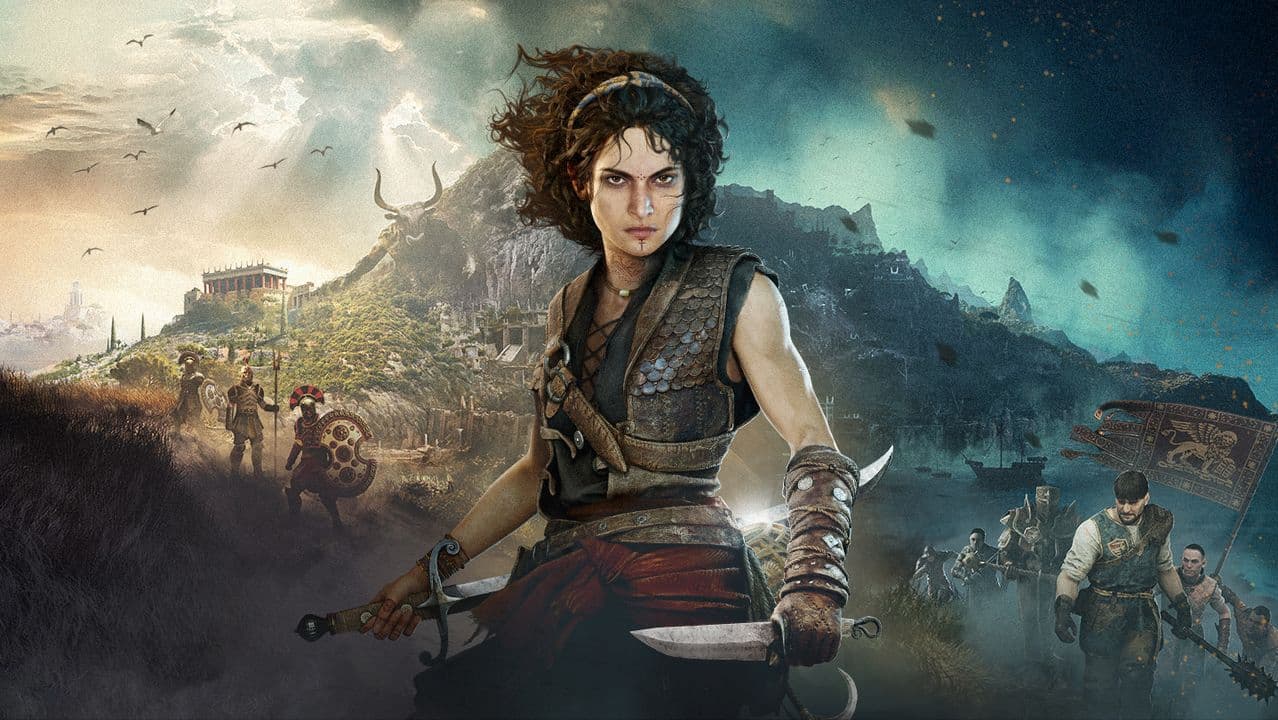
When the harrowing adventures of Amicia and Hugo reached their conclusion, both Asobo and players faced a significant question: what comes next? While fans remained in the dark for some time, the answer crystallized quickly for the Bordeaux team—A Plague Tale needed to continue, but in a fundamentally different way. Now, four years later, we stand at the threshold of A Plague Tale Legacy, a prequel that introduces players to Sophia, the charismatic pirate who stole hearts in Requiem, set fifteen years before the events of that game. This installment takes us to the Isle of the Minotaur off the coast of Greece for a treasure hunt unlike any other.
The historical context enriches this Mediterranean setting tremendously. Asobo’s decision to ground the narrative in the Minoan civilization—one of the earliest advanced European cultures that flourished on Crete and surrounding islands between 3000 and 1450 BCE—adds layers of archaeological mystery to the proceedings. The legendary Minotaur myth, which has captivated imaginations for millennia, provides the perfect backdrop for a tale blending historical intrigue with supernatural horror. Players will find themselves exploring environments that authentically recreate the architectural grandeur of this ancient civilization, from palatial ruins to labyrinthine underground passages.
Gameplay Evolution: From Survival Horror to Adventure Spectacle
Sophia’s journey diverges significantly from those of Amicia and Hugo. While the mysteries surrounding the Macula remain present as a narrative backdrop, this installment prioritizes Sophia’s personal story as she grapples with her connection to the enigmatic island and its legendary treasure. Her band of treasure hunters has long sought this prize without success. Determined to find answers to the affliction consuming her and to end the tragedies this quest has spawned, Sophia takes matters into her own hands, venturing to the island with her companion Leni. The first hours establish a radical departure from the franchise’s previous entries. Where Innocence and Requiem positioned themselves as France’s answer to The Last of Us, A Plague Tale Legacy emerges as Asobo’s Uncharted, seasoned with generous helpings of Tomb Raider influence.
The inspirations are unmistakable—in cinematography, storytelling, and gameplay mechanics—yet Asobo digests these influences with remarkable skill. Traversing the Isle of the Minotaur under scorching sunlight proves an absolute delight as players encounter one visual marvel after another, set against the majestic vestiges of Minoan civilization. The wind effects on sand and fabric, the lighting, the songs of cicadas and birds—everything enhances the spectacular beauty unfolding before players’ eyes. This represents a significant technical achievement, building upon the expertise Asobo has cultivated through their work on Microsoft Flight Simulator, another title that demonstrated their mastery of environmental rendering and atmospheric effects.
Puzzle Design and Combat: A Refined Balance
Balance defines every aspect of A Plague Tale Legacy’s gameplay. When players aren’t navigating using clues from Sophia’s journal—accessible at any moment—they’re solving elegantly designed puzzles while carefully avoiding devastatingly lethal traps. And truly lethal they are. Don’t expect the forgiving approach found in Naughty Dog titles; here, any mistake proves fatal. Rather than frustrating, this difficulty enhances the sense of embarking on a grand adventure alongside Sophia, where each discovery brings both wonder and exhilaration in the face of genuine danger. The puzzle design draws from real archaeological theories about ancient security mechanisms, lending credibility to the deadly contraptions players must circumvent.
Combat represents the final major gameplay pillar, with military forces determined to claim the treasure first providing constant opposition. This aspect has received the most substantial improvements since 2022. Abandoning Requiem’s occasionally clumsy approach, this installment equips Sophia with genuine sword-fighting expertise. Kicks, sword strikes, parries, and dodges combine in muscular, visceral, and dynamic confrontations that stand as an unqualified success. On Hard difficulty, where two successive hits fell Sophia, every encounter crackles with tension. Yet the pirate commands numerous tools: various swords offering distinct advantages, a grappling hook useful for both traversal and drawing enemies closer, and throwable objects for stunning opponents. Collectible charms scattered throughout provide passive buffs, rewarding thorough exploration with increasingly powerful bonuses.
The Return of A Plague Tale’s Dark Soul
The game adopts a light-RPG approach that provides depth without overwhelming complexity. This manifests through automatically-applied charm effects and a streamlined skill tree of just five abilities, purchasable with resonance points found in the environment. Asobo demonstrates masterfully that less can indeed be more, delivering a complete and satisfying experience without drowning players in secondary objectives or unnecessarily open areas. The studio maintains directional focus and rhythmic control throughout the fifteen-hour adventure, a refreshing approach in an era of bloated open-world games. This design philosophy echoes the studio’s growth since their early days creating licensed titles for Disney and Pixar, showing how technical competence evolved into genuine artistic vision.
Readers may wonder where the A Plague Tale spirit resides amid these adventure-game trappings. Rest assured—it emerges powerfully. The opening hours suggest Asobo distancing itself from its franchise’s essence to embrace Uncharted and Tomb Raider aesthetics, but this proves a deliberate setup for a subtler, unexpected return to form. Like a threatening cloud slowly obscuring the warm sun, the Macula’s legacy gradually darkens Sophia’s voyage, transforming her into the unwitting protagonist of her own Greek tragedy. The comfortable warmth of early hours gives way to an unrelenting descent into horror. Sophia faces physical and emotional trials at every turn as the adventure’s central thread emerges with devastating clarity.
A Plague Tale Legacy may forgo the rat swarms that defined previous entries, but it replaces them with an equally effective threat—one we’ll leave players to discover themselves. Those drawn to the franchise’s emotional core will find themselves in familiar territory, perhaps more so than ever. Asobo has clearly advanced their narrative craft and cinematic direction. From Sophia to Theseus—a mysterious gladiator players control during the heroine’s visions—to the supporting cast, each character possesses genuine depth and presence that makes them irresistibly compelling. The French voice acting maintains exceptional quality, while Olivier Derivière’s extraordinary score once again elevates the narrative to sublime heights, occasionally compelling players to pause simply to savor the music longer. The musical approach differs from previous entries while striking with equal emotional force.
Expert Opinion: Resonance: A Plague Tale Legacy represents a pivotal moment for French game development, demonstrating that studios outside traditional gaming powerhouses can compete at the highest tier of narrative-driven experiences. Asobo’s willingness to evolve their formula while maintaining emotional authenticity suggests the franchise has considerable longevity ahead. Industry observers should watch closely as this title may establish new benchmarks for mid-sized studio productions, potentially influencing how publishers approach similar projects in the coming years.