






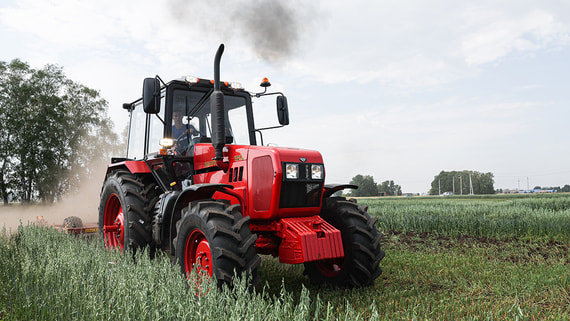
The Minsk Tractor Works (MTZ), one of the largest agricultural machinery manufacturers in the former Soviet Union, has announced plans to optimize its dealer network in Russia. The Belarusian enterprise, which has been a cornerstone of the country’s industrial sector for decades, is looking to streamline its distribution channels in its largest export market while maintaining overall sales volumes. According to company officials, the restructuring aims to improve efficiency and customer service rather than reduce the company’s presence in the Russian Federation.
Despite the planned dealer network consolidation, MTZ leadership has confirmed that the overall structure of export sales will remain unchanged by year’s end, with Russia continuing to serve as the primary destination for Belarusian tractors. This strategic decision reflects the deep economic ties between Belarus and Russia, which have only strengthened in recent years amid Western sanctions and shifting geopolitical alignments.
Historical Significance and Production Capacity
The Minsk Tractor Works holds a special place in the industrial history of Eastern Europe. Founded in 1946 in the immediate aftermath of World War II, the enterprise was established to help rebuild the agricultural sector of the war-devastated Soviet Union. Over the decades, MTZ has produced millions of tractors that have worked fields across dozens of countries, from the steppes of Central Asia to the farmlands of Africa and Latin America. The iconic Belarus brand became synonymous with reliable, affordable agricultural machinery suitable for small and medium-sized farms.
Today, MTZ remains one of the world’s largest tractor manufacturers, with an annual production capacity exceeding 50,000 units. The company produces a wide range of agricultural machinery, from compact utility tractors to powerful units capable of handling the most demanding farming operations. The enterprise employs thousands of workers and serves as a vital component of the Belarusian economy, contributing significantly to the country’s export revenues and industrial output.
Russia as the Primary Export Market
Russia has historically been the largest market for Belarusian tractors, a relationship rooted in the shared Soviet past and reinforced by the economic integration between the two countries. The Russian agricultural sector, which spans millions of hectares of arable land, requires constant replenishment of farming equipment. MTZ tractors have traditionally offered an attractive combination of affordability, reliability, and ease of maintenance that appeals to Russian farmers, particularly those operating small and medium-sized agricultural enterprises.
The importance of the Russian market has grown even more pronounced in recent years. Western sanctions imposed on Belarus following the contested 2020 presidential election and subsequent political crackdown have limited the company’s access to European and American markets. Consequently, MTZ has doubled down on its presence in Russia and other friendly markets, including countries in Central Asia, Africa, and Southeast Asia. Industry analysts estimate that Russia accounts for approximately 40-50 percent of MTZ’s total export sales, making any adjustments to the dealer network in that country a matter of strategic significance.
Dealer Network Optimization Strategy
The decision to restructure the dealer network in Russia appears to be driven by efficiency considerations rather than a scaling back of operations. According to industry experts, consolidating dealerships can lead to improved service quality, better inventory management, and more consistent customer experiences. By reducing the number of intermediaries and working with larger, more established dealers, MTZ may be seeking to strengthen its brand presence and improve after-sales support, which is crucial in the agricultural machinery sector where downtime during planting or harvesting seasons can be costly for farmers.
The optimization also reflects broader trends in agricultural equipment distribution worldwide. Major manufacturers increasingly favor working with fewer but more capable dealers who can provide comprehensive services, including financing options, training, spare parts availability, and technical support. This approach allows manufacturers to maintain better quality control and build stronger relationships with end customers. For MTZ, implementing such a strategy in Russia could help the company compete more effectively against both domestic Russian manufacturers and other foreign brands seeking to expand their presence in the market.
Expert Opinion: The restructuring of MTZ’s dealer network in Russia signals a maturation of the Belarusian-Russian agricultural machinery market rather than a retreat. As sanctions continue to reshape trade patterns in the region, we can expect MTZ to deepen its integration with Russian distribution channels while potentially exploring joint ventures or localized production to secure its market position long-term. The success of this optimization will likely depend on MTZ’s ability to maintain competitive pricing while improving service quality in an increasingly consolidated Russian agricultural sector.