







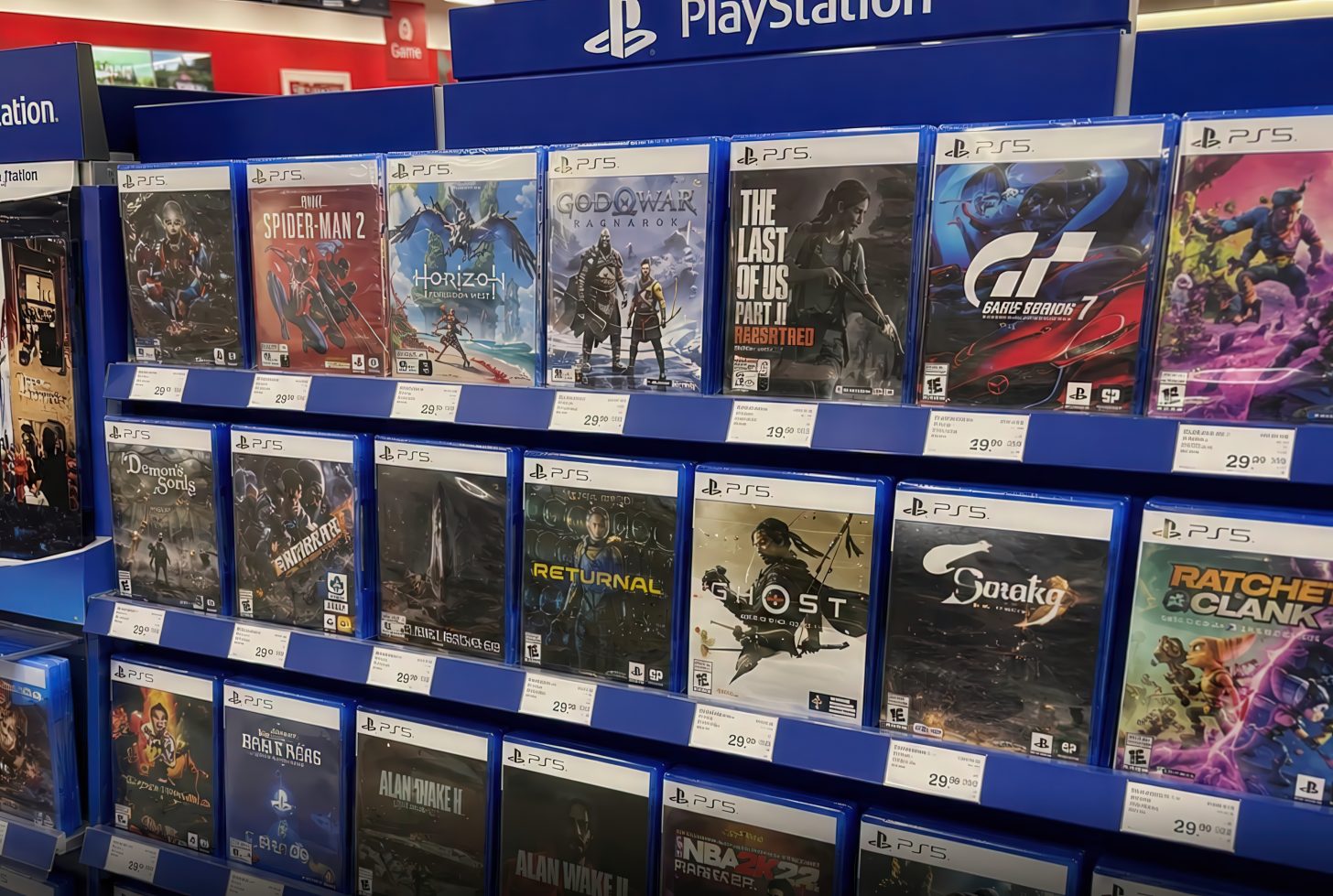
The United States physical video game market has reached an unprecedented low point, with July 2024 recording just $85 million in revenue—the weakest monthly total since market research firm Circana began tracking the industry in 1995. This historic decline provides compelling evidence supporting Sony’s controversial announcement to cease manufacturing new physical PlayStation discs beginning January 2028, a decision that sparked considerable debate among gaming enthusiasts and industry observers when first revealed.
According to Circana analyst Mat Piscatella, physical software spending in July dropped sharply against an already-declining baseline. The numbers paint a stark picture of consumer behavior shifting away from traditional retail: during the week ending July 11, only two PlayStation games managed to sell more than 10,000 physical copies, compared to seven titles achieving that threshold in previous comparable periods. This dramatic contraction signals a fundamental transformation in how gamers acquire and consume their entertainment.
The Digital Revolution Reshaping Gaming
The transition from physical to digital game distribution has been accelerating for over a decade, but recent data suggests the industry may be approaching a tipping point. Digital storefronts like PlayStation Store, Xbox Marketplace, and Steam have fundamentally altered consumer expectations, offering instant access to games without the need to visit retail locations or wait for shipping. The convenience factor, combined with frequent digital sales and subscription services like PlayStation Plus and Xbox Game Pass, has made physical media increasingly obsolete for many players.
Industry analysts have long predicted this shift, but the speed of the decline has surprised even seasoned observers. Physical game sales dominated the market as recently as 2013, accounting for approximately 80% of total software revenue. By 2023, that figure had inverted dramatically, with digital sales comprising the vast majority of game purchases. The COVID-19 pandemic accelerated this trend, as lockdowns forced consumers to embrace digital purchasing out of necessity, and many never returned to physical retail habits.
Sony’s Strategic Positioning for 2028
Sony’s announcement to discontinue physical disc production by January 2028 initially drew criticism from collectors, preservation advocates, and consumers in regions with limited internet infrastructure. However, the company appears to have accurately read the market trajectory. The Japanese electronics giant has been gradually preparing for an all-digital future, releasing the PlayStation 5 Digital Edition alongside the standard disc-equipped model at launch in November 2020. Reports suggest the digital variant has consistently outsold its disc-based counterpart in several key markets.
The financial incentives for Sony to embrace digital distribution are substantial. Physical game sales require manufacturing costs, shipping logistics, retail margins, and inventory management—expenses that evaporate with digital distribution. Publishers typically receive a larger percentage of revenue from digital sales, and the elimination of used game resales means each transaction generates new revenue. For a company seeking to maximize profitability in an increasingly competitive entertainment landscape, the mathematics strongly favor digital.
Implications for Gamers and the Industry
The decline of physical media raises significant concerns about game preservation and consumer ownership rights. Digital purchases are essentially licenses that can be revoked, and games regularly disappear from digital storefronts due to licensing issues or publisher decisions. Physical collectors argue that disc-based games provide true ownership and ensure titles remain playable regardless of server availability or corporate decisions. Organizations dedicated to game preservation have expressed alarm at the industry’s trajectory, warning that countless titles could become permanently inaccessible.
Retailers are also feeling the impact of declining physical sales. Major chains like GameStop have struggled to adapt their business models, increasingly pivoting toward collectibles, merchandise, and trade-in programs to compensate for shrinking software revenues. Smaller independent game stores face even greater challenges, with many closing permanently as foot traffic declines. The $85 million July figure represents not just a market statistic but real consequences for businesses and employees throughout the retail ecosystem.
Expert Opinion: The July sales data essentially validates Sony’s 2028 timeline as strategically sound rather than premature. We can expect Microsoft and Nintendo to announce similar disc discontinuation plans within the next 18-24 months, effectively making physical game media a niche collector’s market by decade’s end. The industry must now urgently address digital preservation frameworks before irreplaceable gaming history becomes permanently inaccessible.