






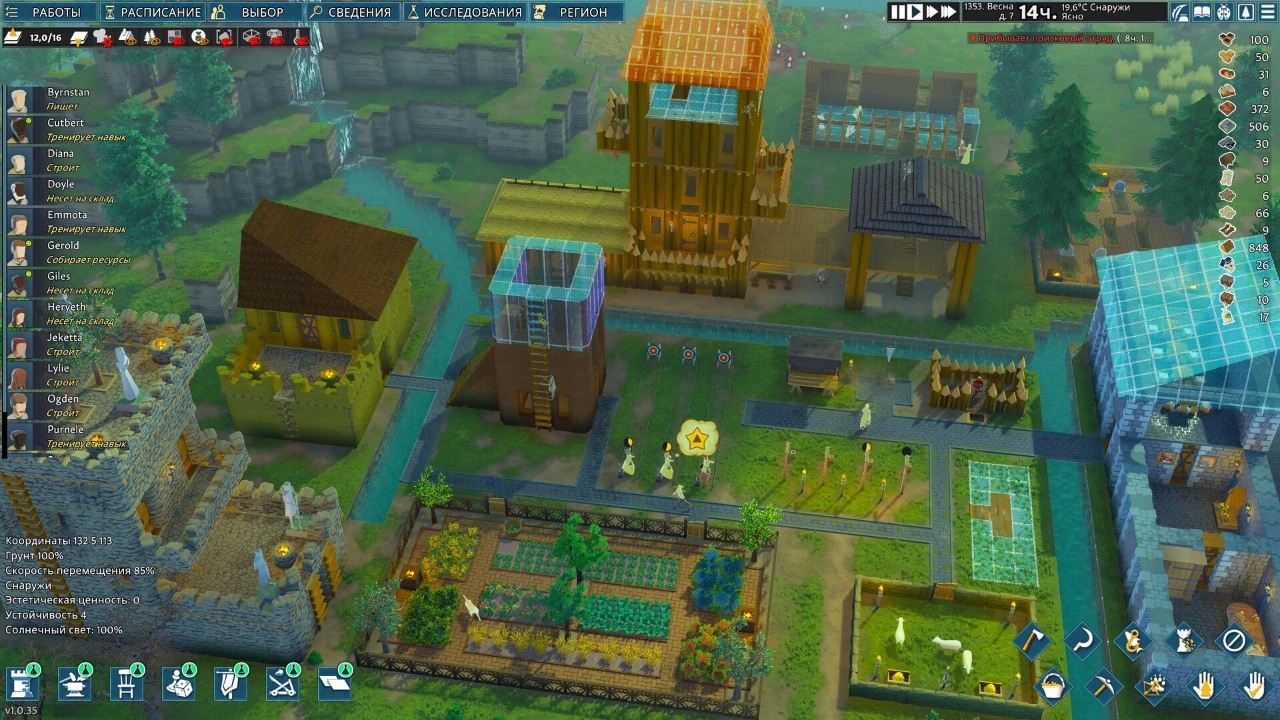
In the harsh world of Going Medieval, where humanity struggles to rebuild civilization after a devastating plague has wiped out most of the population, survival has always been a challenging endeavor. The indie colony simulation game, developed by Foxy Voxel and published by The Irregular Corporation, has captivated players with its blend of medieval settlement building, resource management, and tactical combat. Now, the development team is preparing to introduce a major gameplay overhaul that promises to fundamentally change how players interact with the game’s various factions.
The upcoming update will significantly expand the faction relations system, moving far beyond the simple friend-or-foe dynamics that currently exist. Players will soon be able to engage in meaningful diplomatic negotiations, forging specific agreements and treaties with neighboring settlements. This represents a substantial evolution of the game’s social mechanics, giving pacifist players and strategic thinkers new avenues to ensure their colony’s survival without necessarily resorting to violence.
A New Era of Medieval Politics
Going Medieval first launched into Early Access on Steam in June 2021, quickly establishing itself as a worthy entry in the colony survival genre popularized by games like RimWorld and Dwarf Fortress. Set in an alternate 14th century where the Black Death has killed approximately 95% of Europe’s population, the game challenges players to guide a small group of survivors as they establish a new settlement from scratch. The medieval setting offers unique gameplay opportunities, from constructing multi-story stone fortresses to managing agricultural systems appropriate to the era.
The new diplomacy system appears designed to add layers of strategic depth that fans have been requesting since the game’s initial release. Rather than simply building defensive walls and training soldiers to fend off hostile raiders, players will now have the option to negotiate from a position of strength or cunning. Early information suggests that these diplomatic options may include trade agreements, non-aggression pacts, and potentially even military alliances that could fundamentally alter the balance of power in the game world.
Building Relationships in a Post-Apocalyptic Medieval World
The development of faction relations in Going Medieval reflects a broader trend in the colony simulation genre toward more nuanced social systems. Games in this category have increasingly recognized that human survival depends not just on resource gathering and defense, but on the complex web of relationships between different groups. Foxy Voxel’s decision to expand these mechanics acknowledges that diplomacy was a crucial aspect of medieval survival, even in times of crisis and societal collapse.
Historical context adds weight to this gameplay addition. During and after the actual Black Death pandemic of 1347-1351, surviving communities in Europe often had to rapidly reorganize their social and political structures. Trade relationships became essential for recovery, as specialized knowledge and resources were scattered among the survivors. The new diplomacy system in Going Medieval could allow players to recreate these historical dynamics, negotiating for skilled craftspeople, essential supplies, or military support against common threats.
For existing players, this update represents one of the most significant content additions since the game entered Early Access. The development team at Foxy Voxel has maintained a steady pace of updates, consistently adding new features, buildings, and gameplay mechanics based on community feedback. The introduction of a comprehensive diplomacy system suggests the game is maturing toward its eventual full release, with core systems becoming more refined and interconnected.
What This Means for Players
The strategic implications of the new faction system are considerable. Players who previously felt forced into military confrontations may now find alternative paths to prosperity. Conversely, diplomatically inclined players will need to carefully balance their relationships, as agreements with one faction could potentially create tensions with others. This web of alliances and rivalries should create emergent storytelling opportunities that have become a hallmark of the best colony simulation games.
As Going Medieval continues its Early Access journey, updates like this demonstrate the development team’s commitment to creating a deep and engaging medieval survival experience. While specific details about the diplomacy mechanics remain limited, the community’s anticipation is palpable. For fans of strategic settlement builders seeking a more nuanced approach to medieval survival, the upcoming update promises to deliver exactly what they’ve been waiting for.
Expert Opinion: The introduction of comprehensive diplomacy mechanics represents a pivotal moment for Going Medieval’s development trajectory. This update positions the game to compete more directly with genre leaders by addressing one of the most requested features from the community. If implemented effectively, the faction negotiation system could significantly extend the game’s replayability and attract players who prefer strategic thinking over pure combat, potentially accelerating the timeline toward a full 1.0 release.